Back to blog
Custom WorkAugust 4, 2026·2 min read
Custom Gates, Railings & Fencing: What Steel Fabrication Can (and Can't) Do
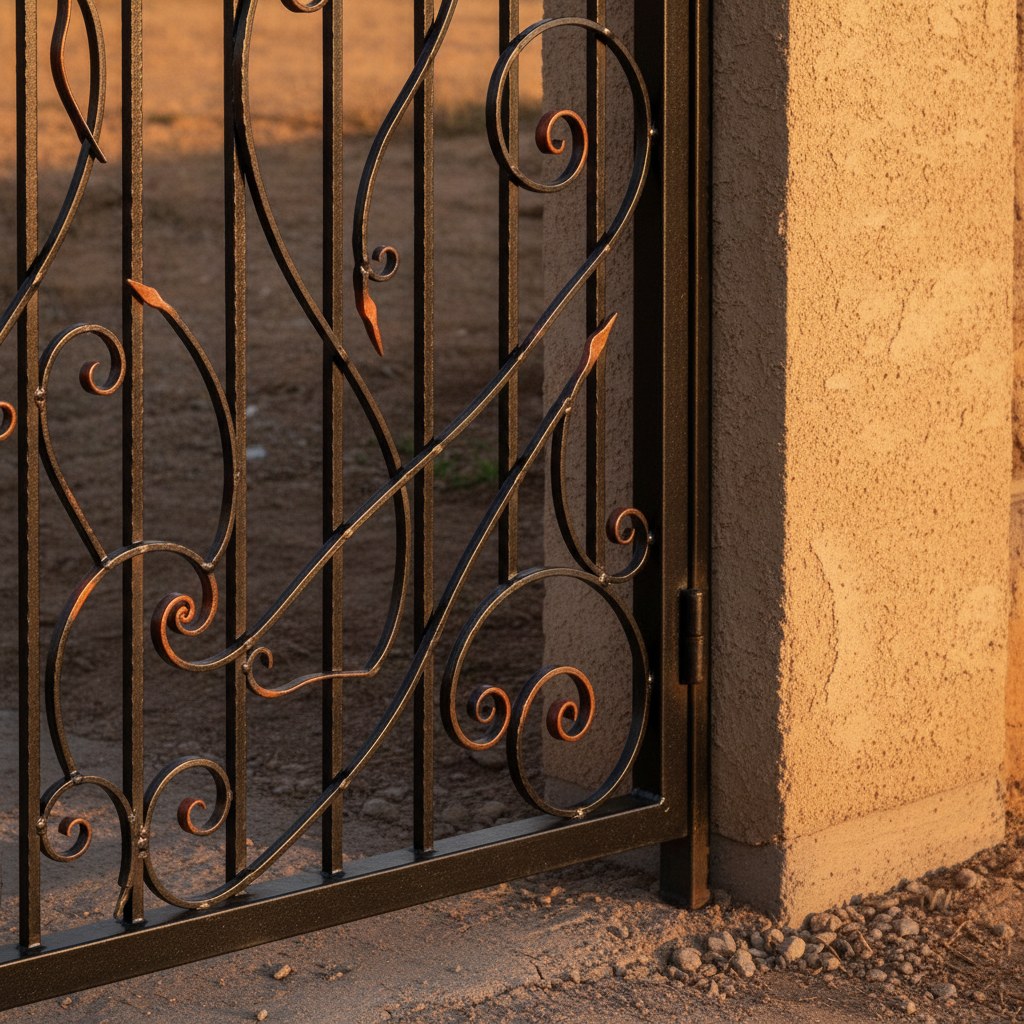
Custom steel gates, railings, and fencing offer a level of fit, durability, and design freedom that off-the-shelf options usually can't match — here's what's actually possible, and what to consider before you commit to a custom project.
Steel is the most common choice for custom gates and railings — strong, weldable, and relatively cost-effective, though it requires a protective coating or paint to resist corrosion over time.
Aluminum offers natural corrosion resistance and lighter weight, a common choice for railings and fencing in coastal or high-moisture environments, though it typically costs more than comparable steel work and requires different welding technique.
Ornamental iron refers to decorative wrought-iron-style work — scrollwork, decorative elements — often used for gates and railings where visual character matters as much as function.
Pre-made gates, railings, and fencing panels are built to standard dimensions — which works fine until your space doesn't match those dimensions, or your design vision doesn't fit a catalog option. Custom fabrication means the piece is built to your exact measurements and specifications from the start, avoiding the gaps, awkward cuts, or compromises that come with forcing a standard-size product into a non-standard space.
It's worth setting honest expectations: custom fabrication generally costs more and takes longer than buying an off-the-shelf product, and complex ornamental work in particular can carry a significant price premium over simpler designs. For a straightforward, standard-size need, a pre-made option might genuinely be the more practical choice — custom fabrication earns its cost premium when your space, design requirements, or durability needs actually call for it.
Get matched with a vetted, insured structural & fabrication contractor to discuss your custom gate, railing, or fencing project.
Free, no-obligation matching with a licensed, insured welding contractor.
Get Matched